


 Drhelp
Stomach pain is a common health issue that can result from indigestion, infections, gas, or more serious conditions. Learn the most common stomach pain causes and when you should seek medical attention.
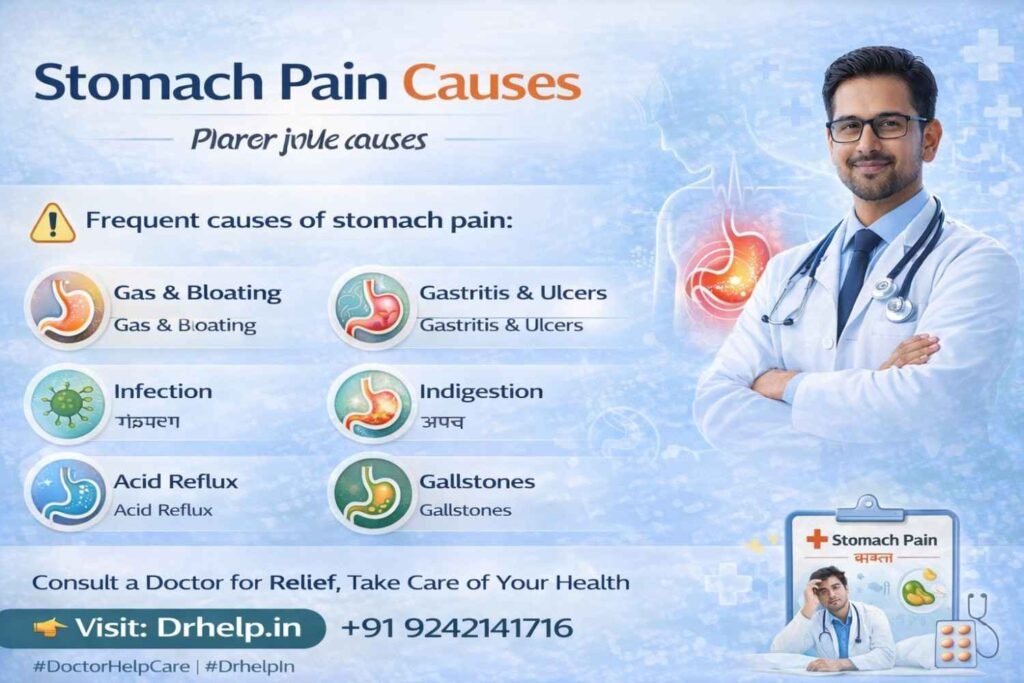
Stomach Pain Causes: What You Need to Know
Stomach pain is one of the most common health complaints experienced by people of all ages. It can range from mild discomfort to severe pain that interferes with daily activities. Understanding the possible stomach pain causes can help you take the right steps toward treatment and prevention.
1. Indigestion
Indigestion is one of the most common reasons for stomach pain. It often occurs after eating heavy, spicy, or fatty foods.
Symptoms include:
- Burning sensation in the stomach
- Bloating
- Nausea
- Feeling full quickly
Eating slowly and avoiding heavy meals can help prevent indigestion.
2. Gas and Bloating
Gas buildup in the digestive system can cause stomach discomfort or sharp pain.
Common causes include:
- Eating too fast
- Drinking carbonated beverages
- Eating gas-producing foods like beans or cabbage
Walking or light exercise can help release trapped gas.
3. Food Poisoning
Food poisoning occurs when contaminated food or water is consumed.
Symptoms include:
- Stomach cramps
- Vomiting
- Diarrhea
- Fever
Food poisoning usually improves within a few days but may require medical attention if symptoms become severe.
4. Gastritis
Gastritis refers to inflammation of the stomach lining.
Common causes include:
- Excessive alcohol consumption
- Long-term use of painkillers
- Bacterial infections
Symptoms may include stomach pain, nausea, and a burning sensation.
5. Acid Reflux
Acid reflux occurs when stomach acid flows back into the esophagus.
Symptoms include:
- Burning sensation in the chest or stomach
- Sour taste in the mouth
- Difficulty swallowing
Avoiding spicy foods and eating smaller meals can help reduce symptoms.
6. Stomach Ulcers
Stomach ulcers are sores in the stomach lining that cause pain and discomfort.
Symptoms include:
- Burning stomach pain
- Nausea
- Loss of appetite
- Bloating
Ulcers usually require medical treatment to heal properly.
7. Constipation
Constipation occurs when bowel movements become difficult or infrequent.
Symptoms include:
- Abdominal pain
- Bloating
- Hard stools
Drinking plenty of water and eating fiber-rich foods can help prevent constipation.
When Should You See a Doctor?
While mild stomach pain usually goes away on its own, you should consult a doctor if you experience:
- Severe stomach pain
- Persistent pain lasting more than a few days
- Blood in vomit or stool
- High fever
- Unexplained weight loss
Early medical attention can prevent serious complications.
Tips to Prevent Stomach Pain
You can reduce the risk of stomach pain by following these simple tips:
- Eat balanced and healthy meals
- Avoid overeating
- Drink enough water
- Exercise regularly
- Reduce stress
- Avoid excessive alcohol consumption
Maintaining a healthy lifestyle plays a key role in digestive health.

Frank1751 20 Apr 2026
https://shorturl.fm/9GQvR
Morgan4213 24 Apr 2026
https://shorturl.fm/jUhFP